

For 14 long years, the disappearance of the Patterson family haunted the Rocky Mountains like a ghost story whispered around campfires. Parents, children, and a shining silver caravan had vanished without a trace — swallowed by the wilderness of Colorado. Locals spoke of them in hushed tones, their story drifting between folklore and nightmare.
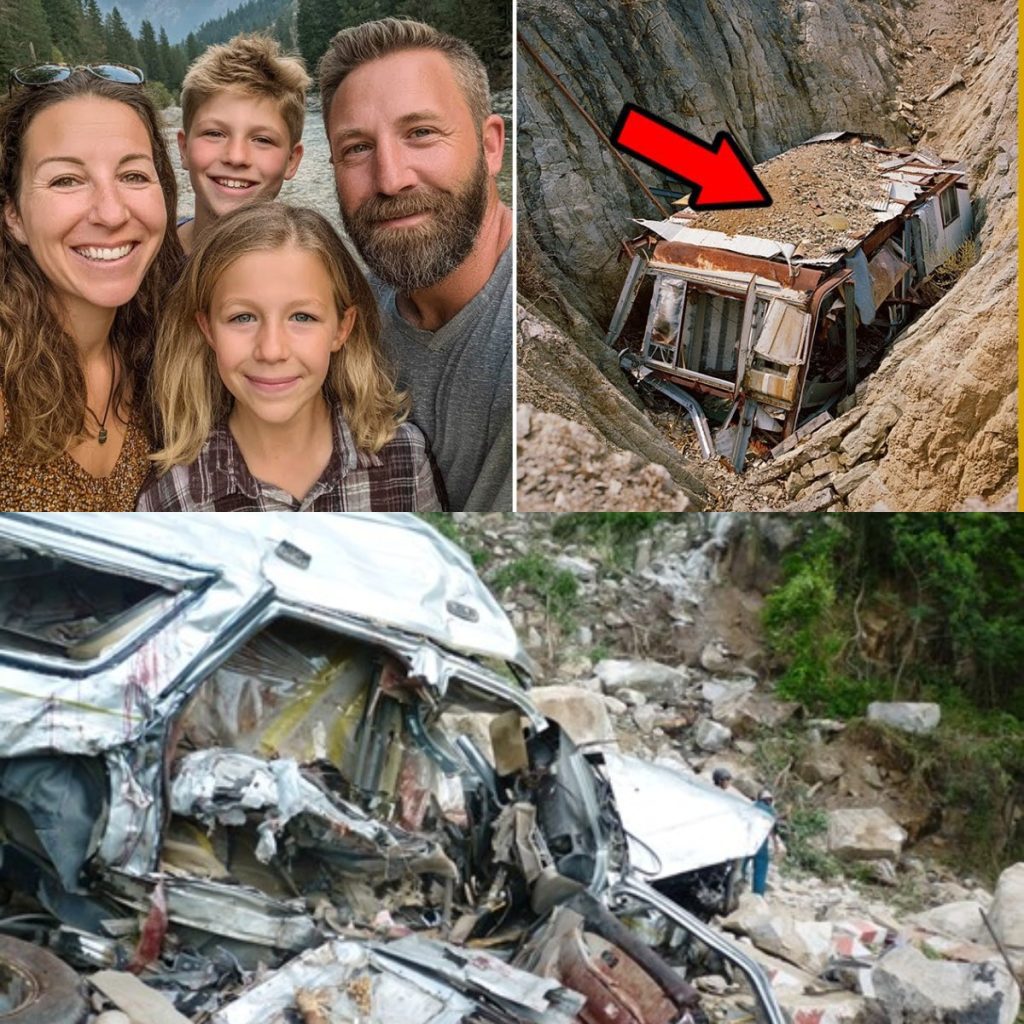
Then, in 2010, deep in the Gunnison National Forest, a geologist stumbled upon a grim discovery: a buried trailer, charred black and filled with human bones. The mystery was solved — and a far darker truth emerged.
This is the shocking saga of the Patterson family’s disappearance: from a dream vacation that ended in blood, to a killer’s secret that lay hidden beneath the forest floor for more than a decade.

The Last Vacation
In August 1996, Michael Patterson, 42, his wife Laura, 39, and their children Jessica, 16, and Noah, 12, set off from Austin, Texas, for what was meant to be the adventure of a lifetime.
- Michael, a proud father and hard-working man, had dreamed of showing his kids the beauty of Colorado’s wild mountains.
- Laura, a devoted schoolteacher, had meticulously planned the trip down to every meal, every book, every board game.
- Jessica, brimming with teenage excitement, brought her camera and newly earned driver’s license.
- Noah, quiet and thoughtful, packed his prized telescope, hoping to gaze upon the Milky Way without the glow of city lights.
Their pride and joy was a gleaming new Airstream trailer, hitched to Michael’s Ford Bronco — a shining silver capsule of family happiness.
The journey began perfectly. Postcards home described breathtaking landscapes and joyous moments. On August 10, a security camera captured the family alive for the last time: Michael refueling, Noah buying chocolate, Jessica smiling, Laura watching with quiet warmth. By the next day, they were gone.
The Great Colorado Search
When the Pattersons failed to return home, alarms went off quickly. Michael was punctual, reliable. When he missed work, his boss called Laura’s family. They hadn’t heard from them in weeks.
On August 26, 1996, the disappearance was officially reported, triggering one of the largest search operations in Colorado’s history.
- Police, park rangers, and volunteers combed forests and mountains.
- Aircraft from the Civil Air Patrol scoured the skies.
- Investigators searched every road, campground, and motel within 100 miles.
At one campsite by a lake, investigators found faint clues: ashes from a fire, an empty marshmallow wrapper. The family had been there — and then, inexplicably, they had not.
Rumors swirled. Some claimed they’d been kidnapped by a cult. Others whispered they’d fled to Mexico for a new life. Over time, their smiling faces on missing posters faded in the sun. Hope turned to folklore. The Pattersons became a ghost story.
A Geologist’s Nightmare Discovery
Fast forward 14 years.
In September 2010, Ben Carter, a 30-year-old geologist and avid hiker, ventured deep into Gunnison National Forest. After heavy rains, landslides had exposed fresh layers of earth.
Climbing a steep slope, Carter noticed something metallic glinting in the sun. At first, he thought it was scrap. But as he dug, he uncovered the unmistakable curve of polished aluminum. It was a trailer.
The Airstream.
But this was no simple wreck. The trailer was half-buried deliberately under soil and rocks. Its surface was blackened by fire.
Peering through a cracked window, Carter froze. Inside, among ashes and charred furniture, were bones — unmistakably human. Skulls, vertebrae, femurs. Four sets.
Terrified, Carter fled the canyon, scrambled back to his car, and dialed 911.
The ghost story was over. The nightmare was real.

Forensics of Horror
Authorities descended on the site, turning the remote canyon into an open-air laboratory. The trailer was carefully excavated, every inch sifted for clues.
Inside, anthropologists confirmed the unthinkable: the remains of four victims, two adults and two children. Dental records left no doubt. The Pattersons had been found.
But how had they died?
The answer came quickly. Hidden among the ashes were bullets and shell casings — all from a 9mm semi-automatic pistol. Ballistic evidence revealed that the family had been executed inside their trailer, shot at close range.
The fire had been set afterward to destroy evidence. The Airstream was not just their vacation home. It had become their tomb.
The Forgotten Name
With confirmation of murder, investigators reopened old files from 1996. Among the dusty reports, a single overlooked detail leapt out.
At the campground near the Pattersons, the registry listed a neighbor in the next plot: Randall Lee Ames, from Grand Junction, Colorado. A quiet name, forgotten for 14 years.
Now, with fresh eyes, detectives dug deeper.
The Man in the Next Campsite
Who was Randall Ames?
- In 1996, he was 47 years old, a Vietnam veteran discharged under mysterious circumstances.
- He had no family, no steady job, drifting from farm work to trucking.
- Locals described him as quiet, reclusive — but prone to sudden, violent rages.
- An unstable loner, scarred by war and bitterness, wandering the highways with anger simmering beneath the surface.
Investigators pieced together a chilling profile: a man who may have seen the happy Patterson family — their laughter, their light, their joy — and felt only envy, rage, and hatred.